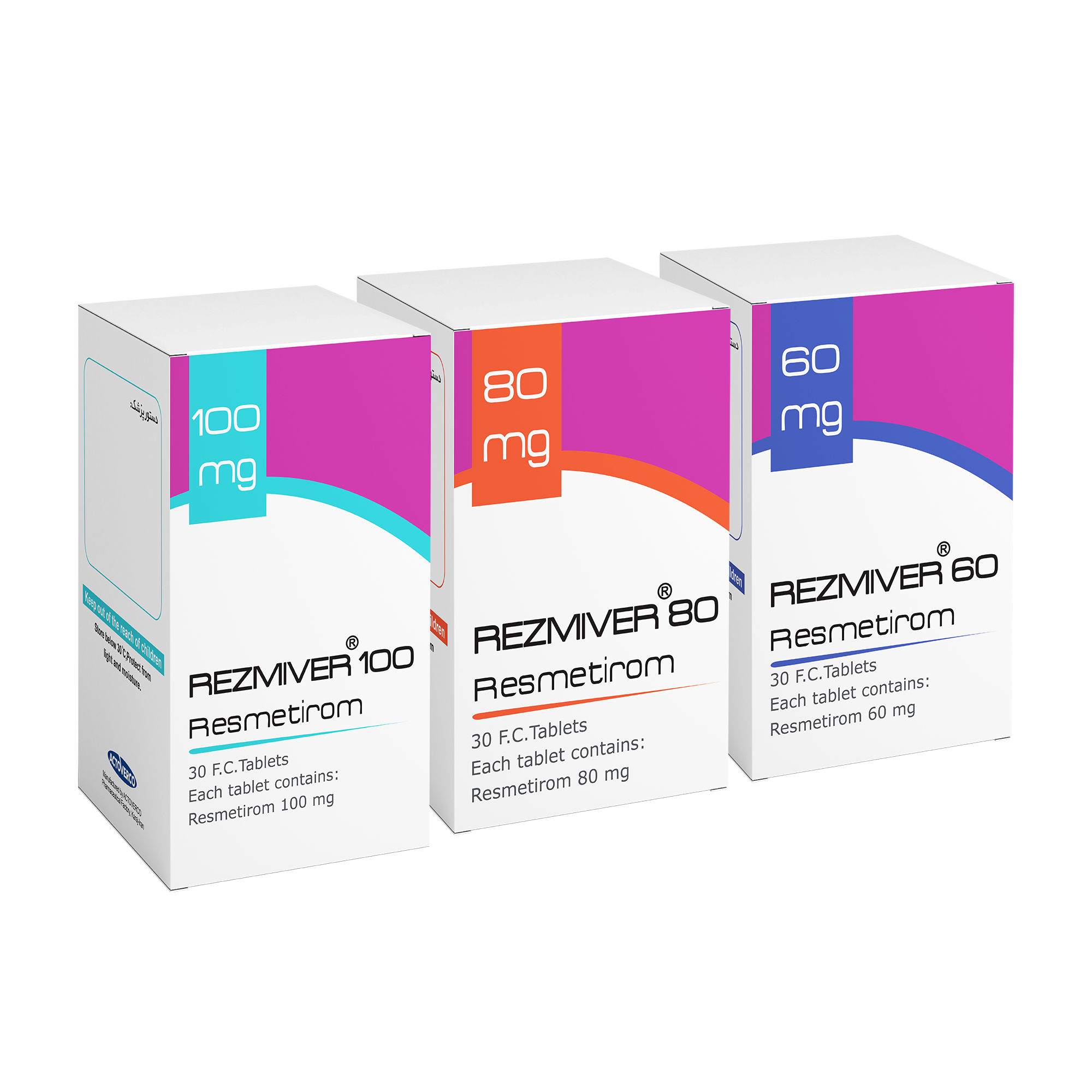
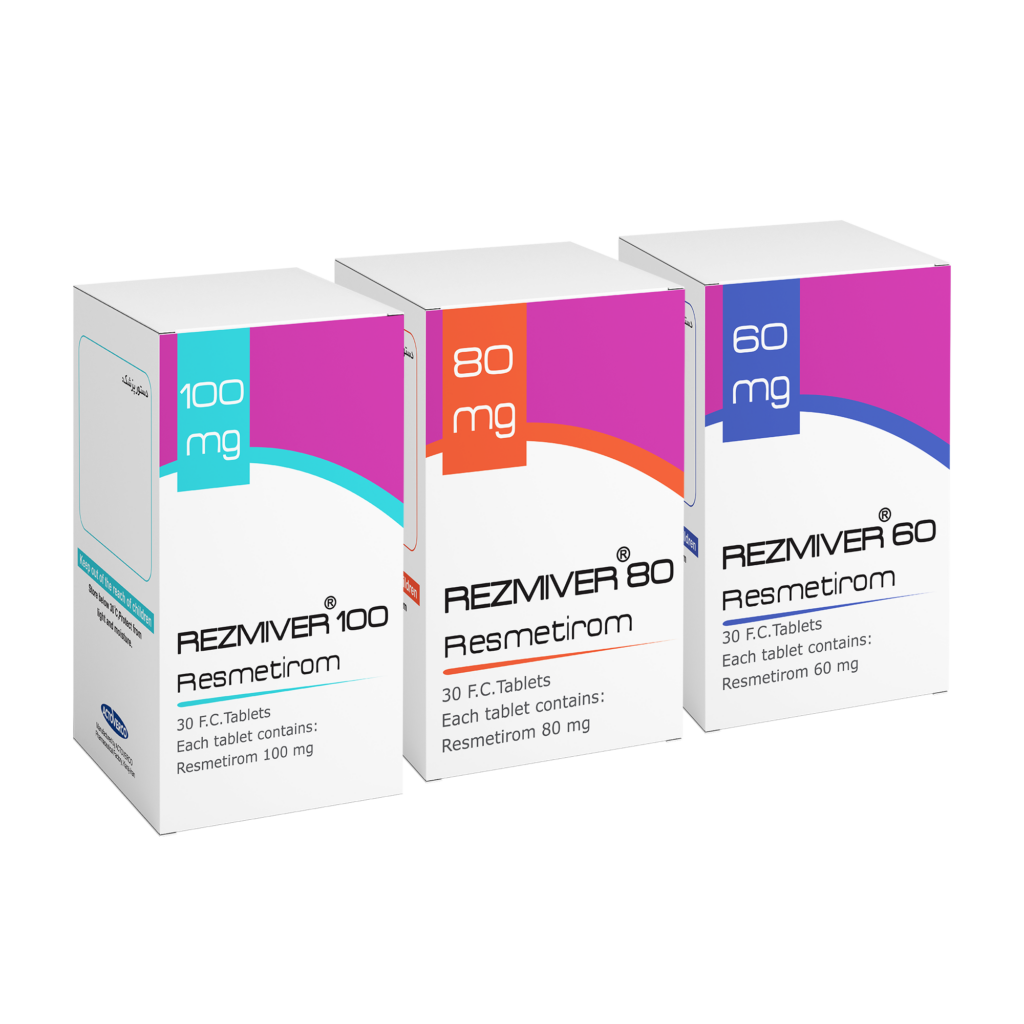
Rezmiver® is the brand name of a drug called resmetirom and manufactured by Actoverco pharmaceutical factory. Resmetirom is a drug that agonizes the effects of the thyroid hormones in the liver.
Dosage form:
Film-coated tablets 60 mg, 80 mg, 100 mg
What is Resmetirom (Rezmiver®) used for?
- It is used to treat a certain liver problem called noncirrhotic metabolic dysfunction-associated steatohepatitis (MASH).
- Follow the diet and exercise plan that your doctor has told you about while taking this drug.
Important notes before taking Resmetirom (Rezmiver®)
- If you are allergic to this drug, any part of this drug, or any other drugs, foods, or substances. Tell your doctor about the allergy and what signs you had.
- If you have liver problems other than MASH.
- If you are taking gemfibrozil.
- If you are pregnant or plan to become pregnant. It is not known if this drug is safe during pregnancy. Ask your doctor about this.
- If you are breastfeeding or plan to breastfeed. It is not known if this drug passes into breast milk. To help protect your baby, talk to your doctor about whether to continue taking this drug or stop breastfeeding.
- Tell your doctor and pharmacist about all of your drugs (prescription or OTC, natural products, vitamins) and health problems. You must check to make sure that it is safe for you to take this drug with all of your drugs and health problems. Do not start, stop, or change the dose of any drug without checking with your doctor.
Important notes while taking Resmetirom (Rezmiver®)
Tell all of your health care providers that you take this drug. This includes your doctors, nurses, pharmacists, and dentists.
- Follow the diet and exercise plan that your doctor has told you about.
- Have your blood work and other lab tests checked as you have been told by your doctor.
- Tell your doctor if you are pregnant, plan on getting pregnant, or are breast-feeding. You will need to talk about the benefits and risks to you and the baby.
Resmetirom side effects
Even though it may be rare, some people may have very bad and sometimes deadly side effects when taking a drug. Tell your doctor or get medical help right away if you have any of the following signs or symptoms that may be related to a very bad side effect:
- Signs of an allergic reaction, like rash; hives; itching; red, swollen, blistered, or peeling skin with or without fever; wheezing; tightness in the chest or throat; trouble breathing, swallowing, or talking; unusual hoarseness; or swelling of the mouth, face, lips, tongue, or throat.
- Signs of liver problems like dark urine, tiredness, decreased appetite, upset stomach or stomach pain, light-colored stools, vomiting, or yellow skin or eyes.
- Signs of gallbladder problems like pain in the upper right belly area, right shoulder area, or between the shoulder blades; changes in stools; dark urine or yellow skin or eyes; or fever with chills.
What are some other side effects of this drug?
All drugs may cause side effects. However, many people have no side effects or only have minor side effects. Call your doctor or get medical help if any of these side effects or any other side effects bother you or do not go away:
- Constipation, diarrhea, stomach pain, upset stomach, or throwing up.
- Itching
These are not all of the side effects that may occur. If you have questions about side effects, call your doctor. Call your doctor for medical advice about side effects.
How is this drug best taken?
- Take this drug as ordered by your doctor. Read all information given to you. Follow all instructions closely.
- Take with or without food.
- Swallow whole. Do not chew, break, or crush.
- Keep taking this drug as you have been told by your doctor or other health care provider, even if you feel well.
What do I do if I miss a dose?
- Skip the missed dose and go back to your normal time.
- Do not take 2 doses at the same time or extra doses.
How do I store and/or throw out this drug?
- Store at room temperature in a dry place.
- Do not store in a bathroom.
- Keep all drugs in a safe place. Keep all drugs out of the reach of children and pets.
- Throw away unused or expired drugs. Do not flush down a toilet or pour down a drain unless you are told to do so. Check with your pharmacist if you have questions about the best way to throw out drugs.