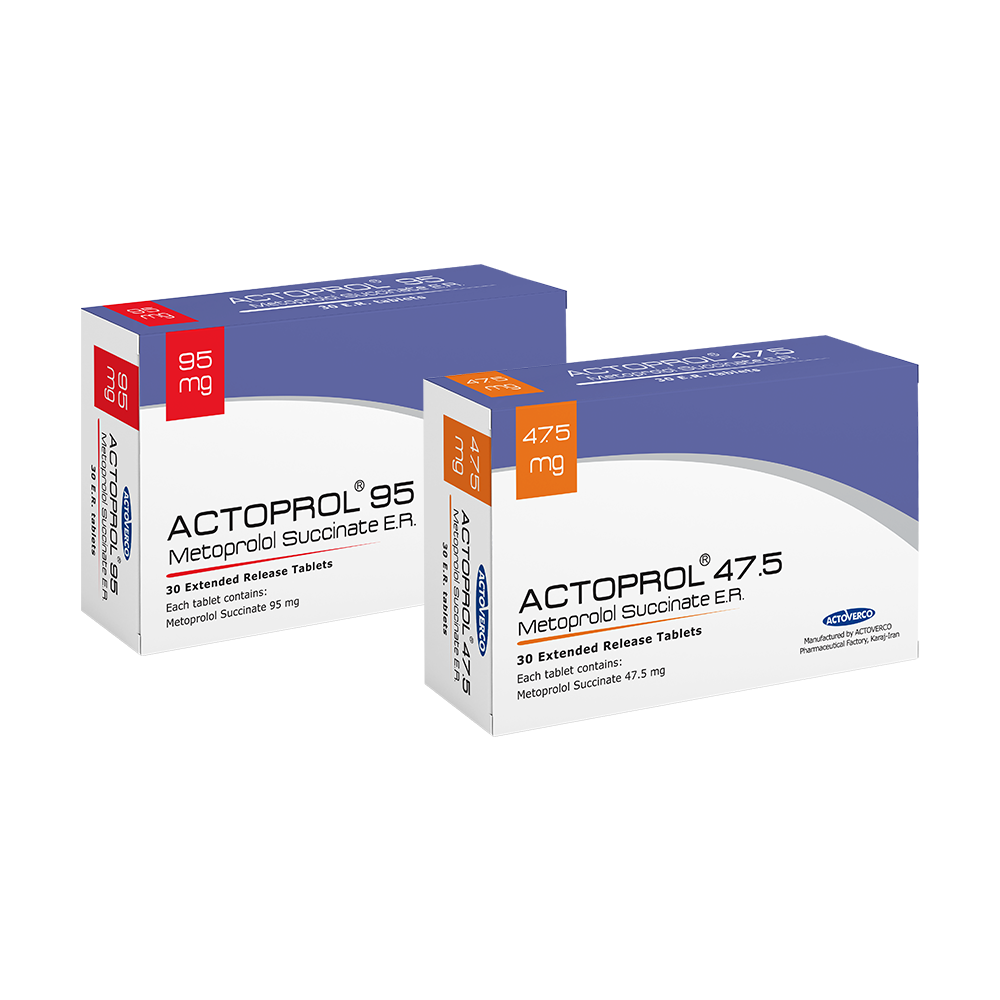
Actoprol® is the brand name of a drug called metoprolol succinate, which is manufactured by Actoverco Pharmaceuticals. This medicine is beta-blocker.
Pharmaceutical form:
Scored extended-release tablets, 47.5 mg and 95 mg
Product introduction
• It is used to treat high blood pressure.
• It is used to treat some types of chest pain (angina).
• It is used in certain people to lower the risk of death and having to go to the hospital because of heart failure.
• It is used after a heart attack to help prevent future heart attacks and lengthen life.
• It may be given to you for other reasons. Talk with the doctor.
• If you are allergic to this drug; any part of this drug; or any other drugs, foods, or substances. Tell your doctor about the allergy and what signs you had.
• If you have any of these health problems: Certain types of abnormal heartbeats called heart block or sick-sinus syndrome, heart failure (weak heart), low blood pressure, poor blood flow to the arms or legs, shock caused by heart problems, or a slow heartbeat.
• If you have any of these health problems: Asthma or other breathing problems like COPD (chronic obstructive pulmonary disease).
• This is not a list of all drugs or health problems that interact with this drug.
• Tell your doctor and pharmacist about all of your drugs (prescription or OTC, natural products, vitamins) and health problems. You must check to make sure that it is safe for you to take this drug with all of your drugs and health problems. Do not start, stop, or change the dose of any drug without checking with your doctor.
• Tell all of your health care providers that you take this drug. This includes your doctors, nurses, pharmacists, and dentists.
• Avoid driving and doing other tasks or actions that call for you to be alert until you see how this drug affects you.
• To lower the chance of feeling dizzy or passing out, rise slowly if you have been sitting or lying down. Be careful going up and down stairs.
• Check blood pressure and heart rate as the doctor has told you.
• Have your blood work and other lab tests checked as you have been told by your doctor.
• This drug may affect certain lab tests. Tell all of your health care providers and lab workers that you take this drug.
• This drug may prevent some signs of low blood sugar like fast heartbeat. This may raise the risk of severe or long-lasting low blood sugar, especially in people with diabetes, children, and people who are fasting. This includes people who are having surgery, are not eating like normal, or are throwing up. If you have questions, talk with the doctor.
• If you have high blood sugar (diabetes), you will need to watch your blood sugar closely.
• If you are taking this drug and have high blood pressure, talk with your doctor before using OTC products that may raise blood pressure. These include cough or cold drugs, diet pills, stimulants, non-steroidal anti-inflammatory drugs (NSAIDs) like ibuprofen or naproxen, and some natural products or aids.
• You may need to avoid drinking alcohol with some products. Talk with your doctor or pharmacist to see if you need to avoid drinking alcohol with this drug.
• Do not stop taking this drug all of a sudden. If you do, chest pain that is worse and in some cases heart attack may occur. The risk may be greater if you have certain types of heart disease. To avoid side effects, you will want to slowly stop this drug as ordered by your doctor. Call your doctor right away if you have new or worse chest pain or if other heart problems occur.
• This drug may make it harder to tell if you have signs of an overactive thyroid like fast heartbeat. If you have an overactive thyroid and stop taking this drug all of a sudden, it may get worse and could be life-threatening. Talk with your doctor.
• If you have had a very bad allergic reaction, talk with your doctor. You may have a chance of an even worse reaction if you come into contact with what caused your allergy. If you use epinephrine to treat very bad allergic reactions, talk with your doctor. Epinephrine may not work as well while you are taking this drug.
• Tell your doctor if you are pregnant, plan on getting pregnant, or are breast-feeding. You will need to talk about the benefits and risks to you and the baby.
• WARNING/CAUTION: Even though it may be rare, some people may have very bad and sometimes deadly side effects when taking a drug. Tell your doctor or get medical help right away if you have any of the following signs or symptoms that may be related to a very bad side effect:
• Signs of an allergic reaction, like rash; hives; itching; red, swollen, blistered, or peeling skin with or without fever; wheezing; tightness in the chest or throat; trouble breathing, swallowing, or talking; unusual hoarseness; or swelling of the mouth, face, lips, tongue, or throat.
• Signs of low blood sugar like dizziness, headache, feeling sleepy, feeling weak, shaking, a fast heartbeat, confusion, hunger, or sweating.
• Depression.
• Severe dizziness or passing out.
• Chest pain that is new or worse.
• An abnormal heartbeat that is new or worse.
• Slow heartbeat.
• Shortness of breath, a big weight gain, or swelling in the arms or legs.
All drugs may cause side effects. However, many people have no side effects or only have minor side effects. Call your doctor or get medical help if any of these side effects or any other side effects bother you or do not go away:
• Feeling dizzy, tired, or weak.
• Diarrhea, upset stomach, or throwing up.
• Feeling cold in the arms or legs.
Skip the missed dose and go back to your normal time. Do not take 2 doses at the same time or extra doses.
• Store at room temperature in a dry place. Do not store in a bathroom.
• Protect from heat.
• Keep all drugs in a safe place. Keep all drugs out of the reach of children and pets.
• Throw away unused or expired drugs. Check with your pharmacist if you have questions about the best way to throw out drugs.