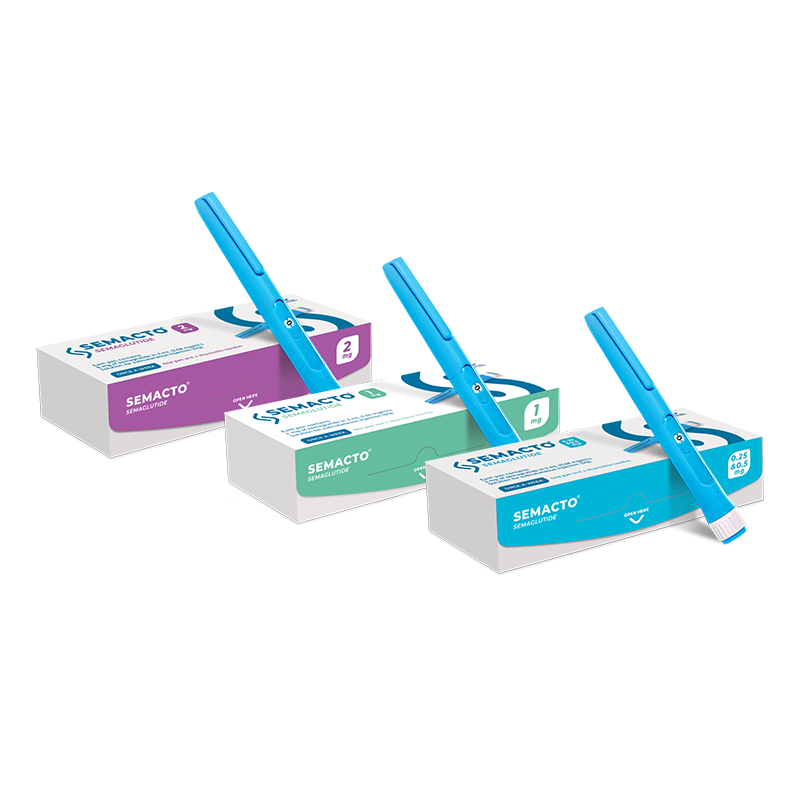
Samacto® (semaglutide) is a once-weekly GLP-1 receptor agonist that plays an important role in improving glycemic control in patients with type 2 diabetes mellitus.
In addition to reducing blood glucose and improving long-term glycemic control (HbA1c), it contributes to clinically meaningful weight reduction.
Clinical evidence has demonstrated cardiovascular benefits as well as renal and potential hepatic protective effects in eligible patients.
Once-weekly administration may improve treatment adherence.
The risk of hypoglycemia may increase when used in combination with insulin or sulfonylureas.
Indications
- Significant reduction in HbA1c in patients with type 2 diabetes
- Clinically meaningful weight reduction in overweight and obese patients with type 2 diabetes
- Established cardiovascular benefits
- Proven renal benefits in patients with type 2 diabetes
- Potential benefits in liver diseases such as fatty liver disease (MASLD/MASH)
Mechanism of Action
Samacto® mimics the action of a naturally occurring incretin hormone.
It works by:
- Enhancing insulin secretion in a glucose-dependent manner
- Suppressing glucagon secretion
- Reducing appetite and increasing satiety
- Slowing gastric emptying
These combined effects result in improved glycemic control and weight reduction.
Dosage and Administration
The dose and titration schedule of Samacto® (injectable semaglutide) should be determined by the treating physician based on clinical condition and tolerability.
General dosing regimen:
- Administered as a subcutaneous injection once weekly on a fixed day
- Injection sites include the abdomen, thigh, and upper arm (rotate sites each time)
Titration:
- Start with 0.25 mg once weekly for 4 weeks
- Increase to 0.5 mg once weekly for at least 4 weeks
- If needed, increase to 1 mg weekly, and in some cases up to 2 mg weekly
Gradual dose escalation is recommended to improve gastrointestinal tolerability and achieve optimal therapeutic effect.
Missed dose:
- If a dose is missed, it should be administered as soon as possible within 5 days
- If more than 5 days have passed, the missed dose should be skipped
- Do not administer a double dose
Warnings and Precautions
- Patients with a history of pancreatitis should be treated with caution and closely monitored
- Patients with diabetic retinopathy should undergo regular eye examinations, as rapid improvement in glycemic control may temporarily worsen the condition
- Use during pregnancy is not recommended due to insufficient safety data
- It is unknown whether semaglutide is excreted in breast milk; therefore, use during breastfeeding is not recommended
Contraindications
- Hypersensitivity to semaglutide
- Personal or family history of medullary thyroid carcinoma (MTC)
- Patients with Multiple Endocrine Neoplasia syndrome type 2 (MEN2)
Drug Interactions
- Concomitant use with glucose-lowering agents such as insulin and sulfonylureas (e.g., gliclazide, glibenclamide) may increase the risk of hypoglycemia. Blood glucose monitoring and dose adjustment may be required.
- Semaglutide delays gastric emptying and may affect the absorption of oral medications, particularly those with a narrow therapeutic index such as warfarin; dose adjustment should be managed by a physician.
Adverse Effects
Common side effects may include:
- Fatigue
- Nausea
- Diarrhea
- Constipation
These effects are usually mild and tend to decrease over time with appropriate dose titration.
Packaging
Each package contains one adjustable pen, which may be used for approximately 4 to 8 weeks, depending on the administered dose.
Storage Conditions
- Store in a refrigerator at 2–8°C
- Do not freeze
- Protect from light
- Keep in original packaging until use